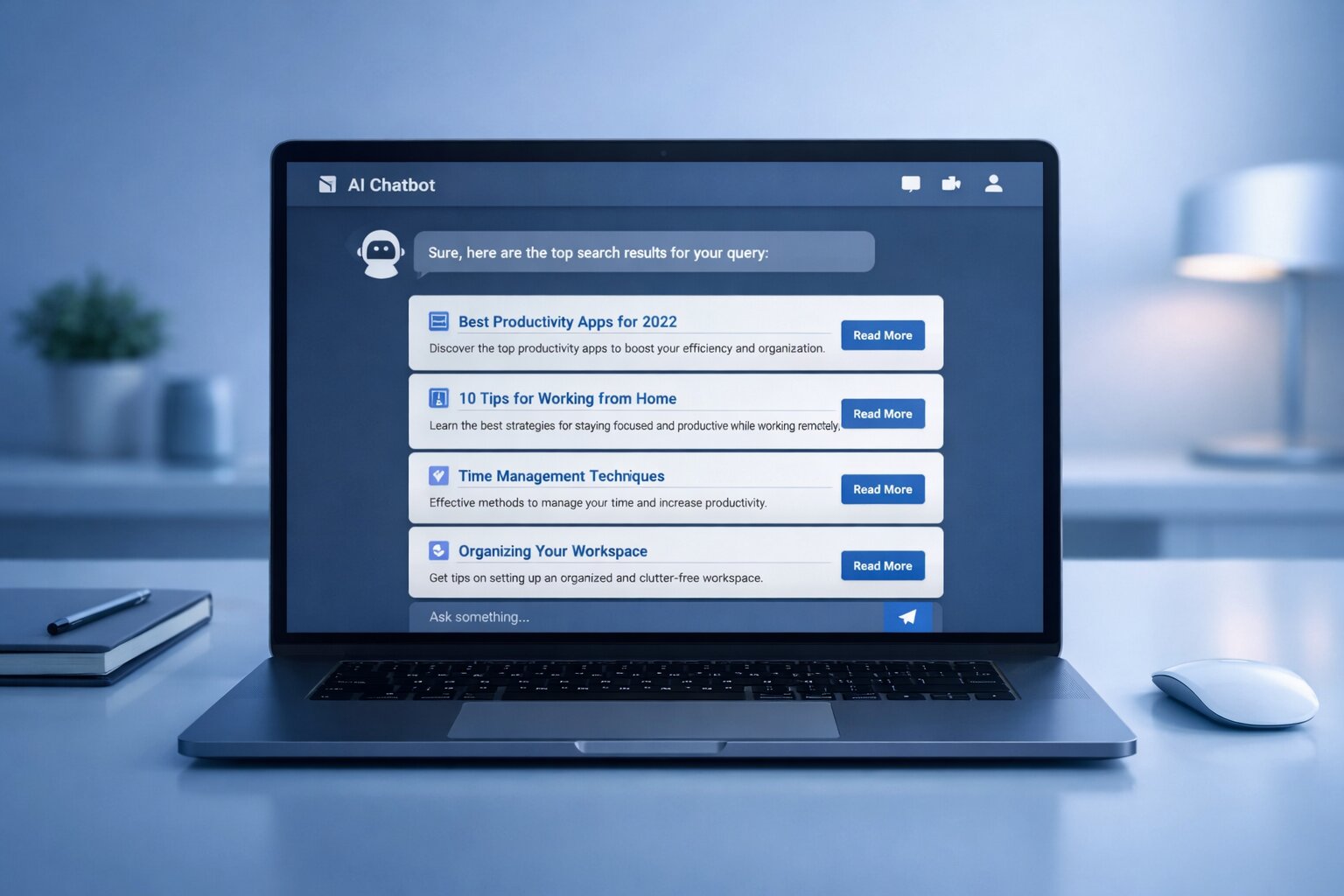
A week ago today at Google I/O, the Search Generative Experience stopped being an experiment. It’s now called AI Overviews, and it’s rolling out to everyone searching in the US, not just people who opted into Search Labs. Google says it expects AI Overviews to reach more than a billion people by the end of the year, which means other countries soon. The UK will be on that list.
SGE has been available through Labs in the US since last year, and it always looked like the obvious end point. When I wrote my ChatGPT predictions at the end of 2022, the question was whether Google would put generated answers above the links. Google has now answered it.
What’s actually changed
For the searcher, a lot of queries now return a block of generated text at the top of the page, built by a Gemini model customised for Search, with links to source pages tucked inside or alongside it. Google says it only shows them where it thinks they add something. Simple navigational searches and most shopping searches look much as they did.
Google also announced some things that go further than a summary. Multi-step questions answered in one go. Planning features, where you ask for a meal plan and get one built for you. Search with a video from Google Lens. Some of these are labelled “coming soon” and it’s hard to know how much of the I/O demo will reach the real product.
In the same week Google added a “Web” filter to the results page, which strips everything back to plain text links. It’s hidden behind the “More” menu for most people. I find it slightly funny that Google has shipped a button for the old product the same week it launched the new one.
The traffic question
This is the bit everyone wants answered, and nobody can answer it yet.
Google’s line is that links included in AI Overviews get more clicks than if the same page had appeared as a normal result for that query. I’d like to see the data behind that. It may well be true for the pages that get cited. It says nothing about the pages that used to rank in positions one to three and now sit below a block of text that already answered the question.
The queries I’d expect to lose most are the informational ones with a short factual answer. How long to boil an egg, what’s the difference between two things, how to do a simple task. A lot of content sites, and a lot of ecommerce blogs written mainly to catch that kind of search, depend on exactly those queries.
Commercial queries feel safer for now. If someone is ready to buy, they still want to see products, prices and shops, and Google has every reason to keep those results looking like results, because that’s where the ads are.
What I’d do before it lands here
- Find out which of your pages depend on informational queries. In Search Console, filter for question-style queries (“how”, “what”, “why”, “best way to”) and see how much traffic they bring. That’s your exposure.
- Check what an AI Overview says for those queries now. If you have a VPN or a US Labs account, search them as a US user. You’ll see whether you’re cited, who is, and whether the answer leaves any reason to click.
- Make the pages that matter worth clicking through to. The pages most likely to keep their traffic are the ones that offer something a summary can’t: original data, a tool, a detailed comparison, real photos, an opinion from someone who’s done the thing.
- Set up reporting so you’ll notice. There’s no separate AI Overview report in Search Console, so you’ll be inferring from click-through rate changes on queries where impressions hold steady. Get a baseline now, while you still have one.
- Keep an eye on the brand queries. If people already know your name, they search for it and click, and that traffic looks a lot safer than the rest.
Where I am on it
I’m less alarmed than some of the commentary this week. Google has been eating short answers for years with featured snippets and knowledge panels, and the sites that survived those were the ones that gave people a reason to visit. AI Overviews push in the same direction, much harder and across far more queries.
What does worry me is accuracy. Generated answers sitting at the top of the world’s biggest search engine will get some things wrong, and it only takes a few bad answers to go round social media before that becomes the story. I expect Google to spend the next few months tightening what triggers an Overview and what doesn’t, which is another reason not to make big decisions on the first few weeks of US data.